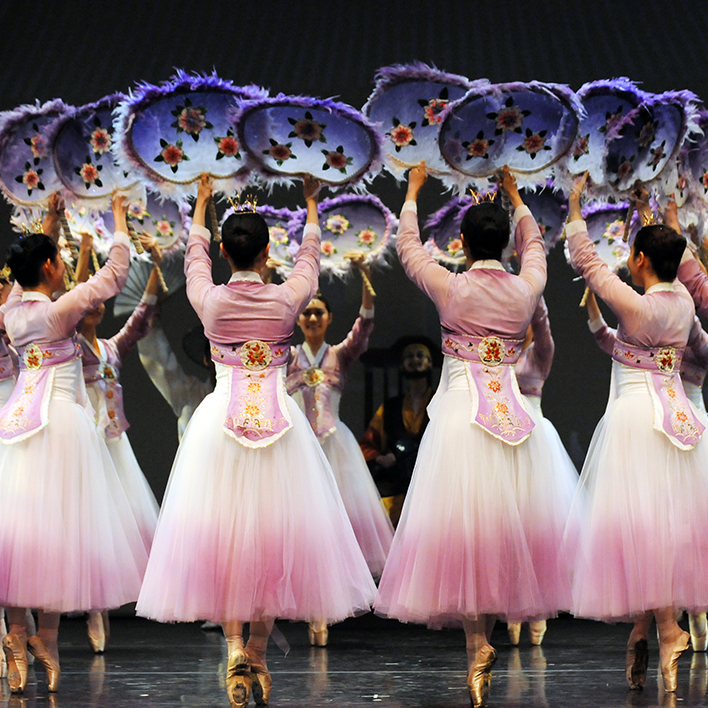





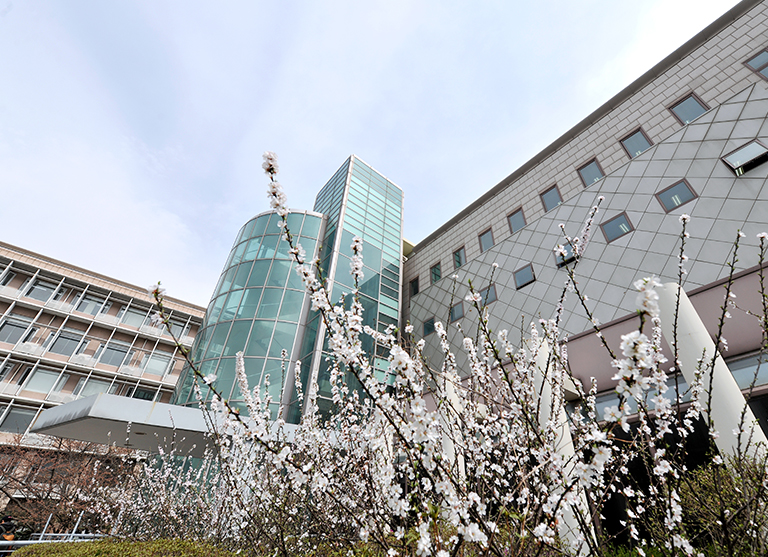
The College of Arts consists of the School of Music, the School of Fine Arts, and the School of Performing Arts. We provide an ideal environment for intensive training and the development of talent. It is our goal to cultivate students’ natural abilities so that they will contribute their art to society, not only in Korea, but around the world as well. We encourage our students to spearhead the artistic trends of the future that will shape the world. We offer modern facilities and a well-rounded curriculum for our students to realize their potential and to take risks as they hone their innovative capabilities. It is our goal th bring out the Individual talents of our students so that they can have a professional life in the art world.
School of Music
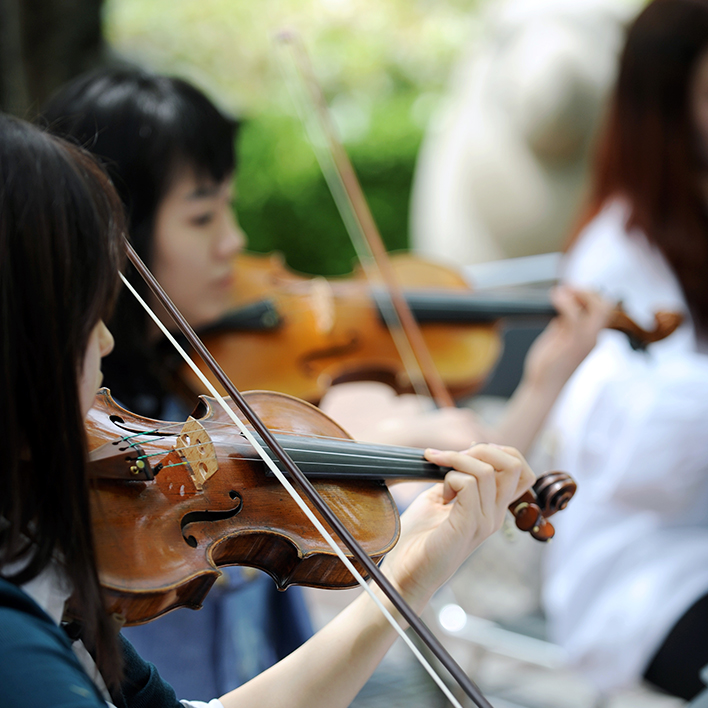
The School of Music maintains various curricular requirements and types of courses through which students can improve their abilities to create and perform music. Our curriculum is focused on developing performing skills and broadening students’ knowledge of the field. Students have numerous opportunities for open or public performances on and off campus during their academic years. Students are encouraged to have intellectual curiosity, enthusiasm, and creativity in every aspect of music so that they can keep training themselves after graduation to become professional musicians who can perform classical music on stage.
-
Voice
Singing is the art of expressing our thoughts and emotions by means of the human voice. It is often said that natural talent is the most essential thing needed for singing. However, training the voice is not just done to improve the voice but the skill with which one employs the voice. Aspects of linguistics, phonetics, physiology, and acting are also essential in voice training. The Voice Department offers various courses to train students to become well-poised in these areas. Students have opportunities to show what they have learned on the stage of operatic and art song concerts.
-
Piano
The Piano Department equips students with performing techniques as well as theoretical knowledge to give them the potential to become performers, collaborative pianists, or educators. We train students at several levels of performance study in which students are assigned repertoires carefully selected to develop their potential. In addition, students build a balanced body of knowledge through various classes, such as Piano Literature and Music Analysis, so that they will come to understand how to interpret music and the proper style for certain musical eras.
-
Orchestral Instruments
The Orchestral Instruments Department fosters the study of the violin, viola, cello, double bass, flute, clarinet, oboe, bassoon, saxophone, horn, trumpet, trombone, tuba, harp, and percussion. Numerous opportunities to appear on stage as soloists or in groups help students improve their performing techniques. For the same reason, we provide individual lessons, chamber music classes, and orchestra rehearsals. Through such activities, we arouse student interest in chamber music and orchestral music, the fields in which most students will be involved after graduation.
-
Composition
The Composition Department nurtures students as professional composers who have logical thinking, skills in expression, and creative minds. In order to do so, we deal with the general social aspects of music, such as history, sociology, philosophy, and education, as well as musical aspects like music theory, analysis, composition, and recital. Through these classes, students obtain the varied academic background necessary not only to be poised creators of music, but also to be valuable members of society.
School of Fine Arts
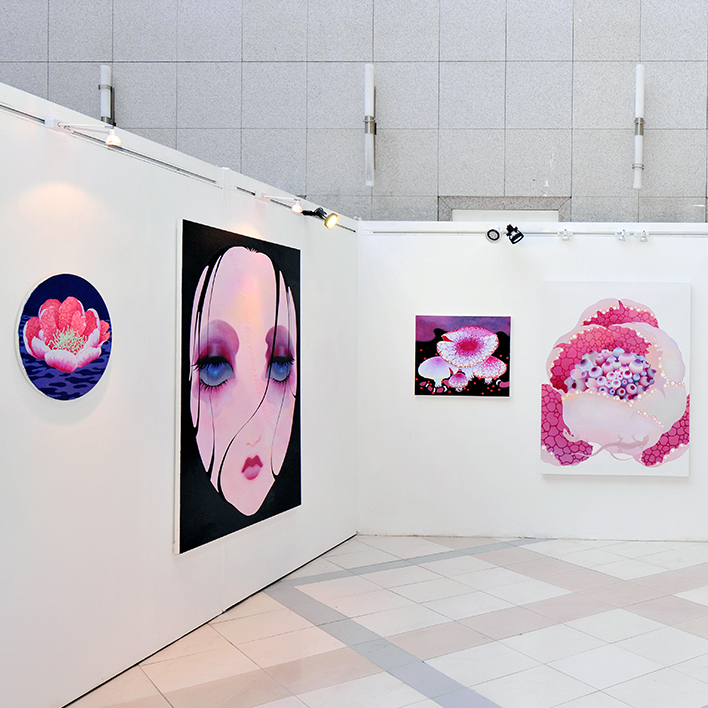
The first purpose of this department is to enrich students’ lives through the study of art. The second purpose is to cultivate students through numerous fine arts education courses to be good artists, critics, or educators. The Fine Art Department has two majors, Painting and Sculpture. After graduation, students can get special jobs requiring creativity and an aesthetic sense, and may work as curators, researchers, or in filmmaking or broadcasting.
-
Painting
The purpose of this major is to develop intellectual, appreciative, and technical approaches to painting and its relevant art forms. Exploring not only conventional art forms like drawing and printmaking but new media such as film, video, installations and computer assisted art, our students delve into new means of expression. In harmony with modernity, through their work, students develop their own personal identities.
-
Sculpture
This major remains future-oriented and frequently introduces new courses in line with the needs of the times. Pertinently fusing the theoretical with the practical, it focuses attention on art training within the rich diversity of media available. It also aims to nurture promising and up-and-coming artists and professionals who are in demand in society. It does so by stirring up creativity and an experimental spirit based in technical mastery.
School of Performing Arts
The School of Performing Arts is composed of the Theater Major, Film Major and the Dance Major. The direct human interaction between the dance and acting disciplines creates the basis upon which the school of performing Arts stands. With up-to-date technology, and creative freedom to develop their filmmaking abilities, abilities, our students of the last 21 years have continued to grow in the national spotlight. We at the School of Performing Arts strive to develop personalities that will contribute to the world through their work. After graduating, students can expect to succeed in the media, broadcasting, performing, and administrative realms.
-
Theater
The goal of the Theater Department is to cultivate creative performing artists with a balanced experimental and theoretical background, allowing them to become actors, directors, creators, or educators after graduation. To train actors, the department provides dramatic and artistic education for students who aspire to perform in theatrical plays, musicals, broadcasts, movies, and other media. Instruction is based on the internationally approved Linklater voice technique and offered alongside professional acting, movement, and singing education. Students take a wide range of courses, including community theater, capstone design, directing, performance creation, performance production, and production practice, while also studying theater history, western drama, Korean theater, and theater education. The department cultivates talented artists with expertise in the theory and practice of creating and planning artistic performances.
-
Film
The Film Department aims to produce graduates with the expertise necessary to lead cultural development by providing them with specialized instruction on movies, broadcasting, TV dramas, game videos, IT content, and other areas of multimedia. The purpose of such instruction is to train creative experts, such as movie and broadcasting directors, editors, artists, producers, and movie critics, who have the necessary skills to lead the movie and broadcasting industries. The department does not seek to merely develop artists skilled in simple techniques, but to discover talented students who can express aspects of modern human life in increasingly meaningful and unique ways via human-centered global education and exploration. Through partnerships with production companies and broadcasting networks, the Film Department helps students cultivate practical abilities and find employment in related industries.
-
Dance
Through our educational program dance majors can expect to become competent dance specialists who can contribute to society. Students will acquire skill in certain movements through step by step instruction. With these background skills, they will then be able to employ their artistic creativity. Ultimately, students pursue studies individually tailored to their future careers as dancers, choreographers, teachers, therapists, or members of any other profession that utilizes dance.